From a cluttered drawer
to a US factory.

How a $40 vial organizer ended up replacing $400 ones — and quietly became a wholesale supply line for the peptide industry.

5 chapters· 8 min read· Updated 2026
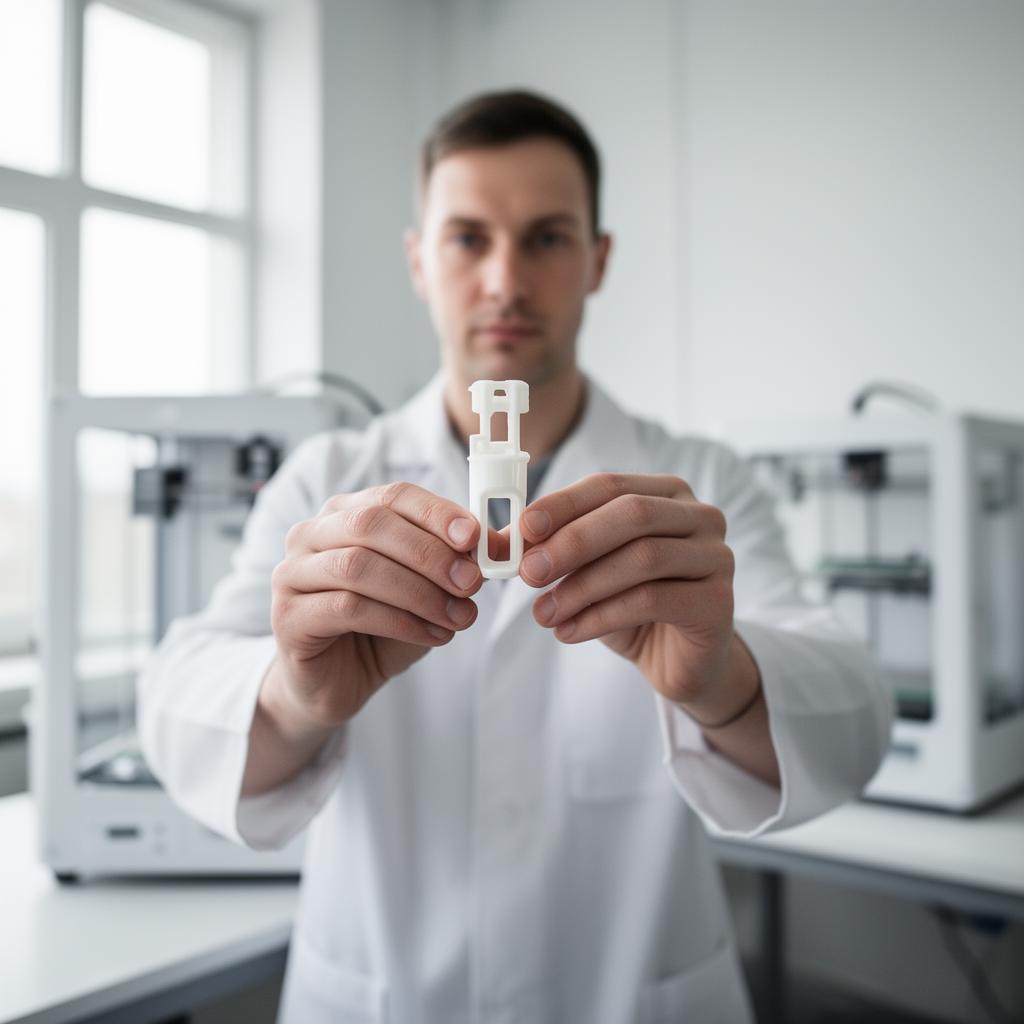
Engineer holding a precision 3D-printed medical component
Fig. 01 — Print floor, Maker Med CoPhoto · 2025

It started in a drawer.

A weekly twenty-minute hunt through a tangled drawer of vials, syringes and BAC water — for a process that should have taken three minutes.

Our founder ran a small peptide protocol out of the kitchen, the same way thousands of people do. The chemistry was easy. The logistics were a disaster.

The market for medical-grade organizers turned out to be split into two useless camps: $400 lab-grade trays designed for institutional labs, or $4 plastic boxes from a marketplace that cracked the first time you wiped them down.

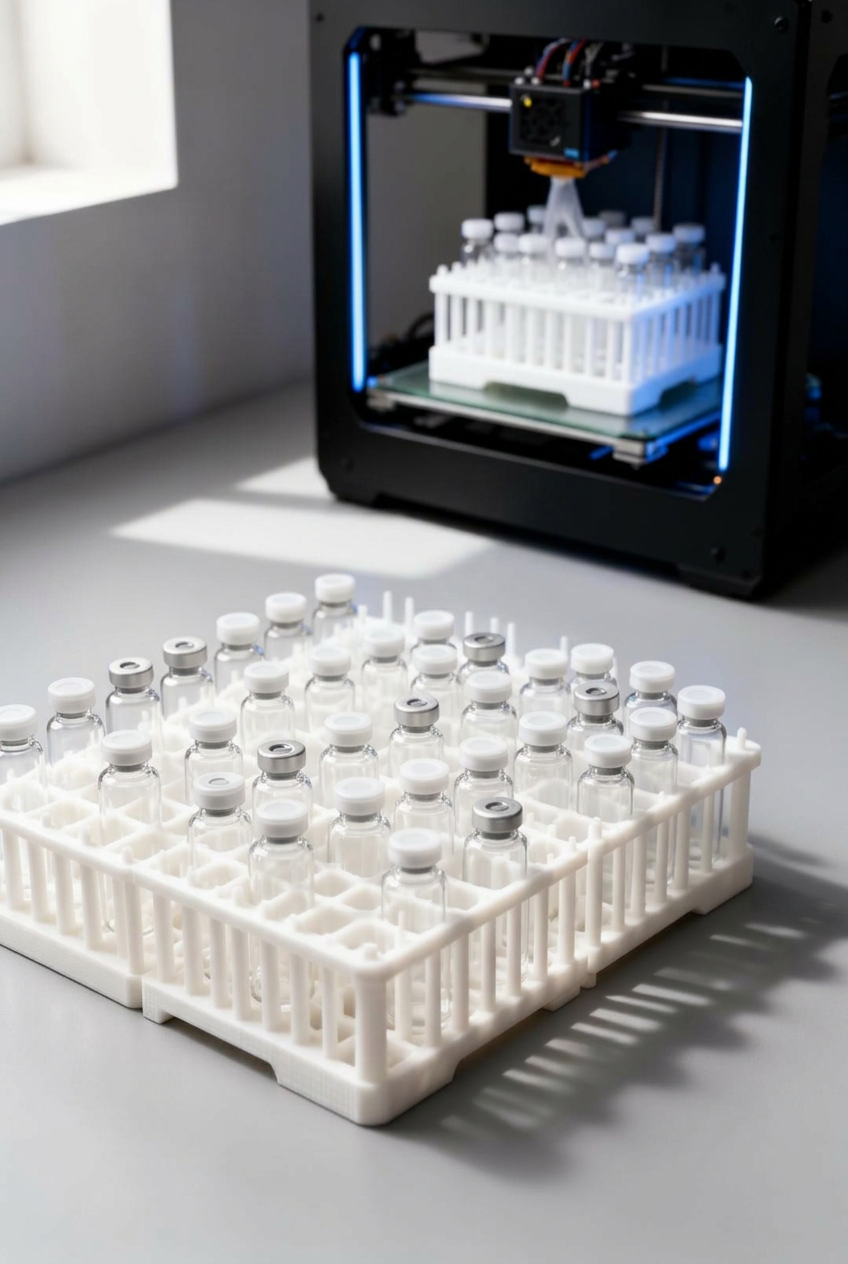
So we sketched something in the middle on a Sunday, printed it on a desktop FDM machine that night, and used it on Monday morning. The drawer went away.

$400 lab-grade or $4 disposable. We refused to accept that those were the only two options.

Clinicians started asking.

What was supposed to be a personal fix turned into a small mountain of DMs from clinics, compounding pharmacies and protocol coaches.

We posted the first photo of the prototype in a private group. By the end of the week we had thirty unsolicited requests. By the end of the month, two clinics in Texas and a research lab in San Diego were paying for early units out of a shared Stripe link.

We launched the Reconstitution Station officially, sold out three production runs in seven days, and started realizing this wasn't a side-project anymore — it was a category nobody was serving correctly.

Three sold-out runs in seven days. The signal was unmistakable.

We built the factory.

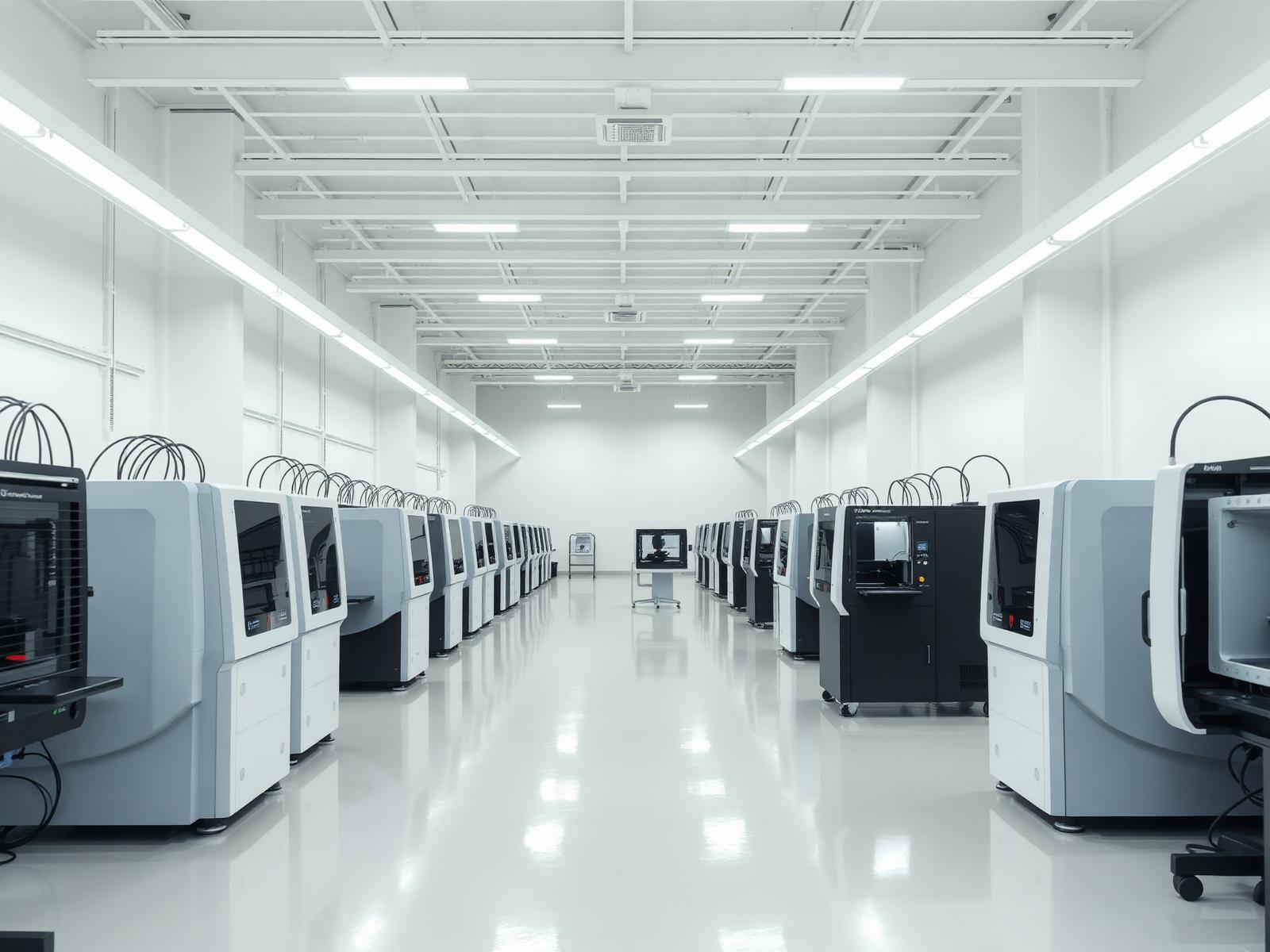
Out of the garage, into a dedicated print floor — medical-grade PETG, racked machines, real QA, real fulfillment.

We invested everything the early sales generated into a dedicated US facility. Industrial FDM and SLA machines running medical-grade PETG and biocompatible resins, climate-controlled curing, batched inspection at 0.08mm layer tolerance.

More importantly: we designed the operation around how medical parts actually need to be made — printed-to-order, traceable per-unit, shipped under your own brand if you want it that way. No tooling, no minimums you can't move, no warehousing dead stock.

B2B took over.

Peptide brands, resellers and clinics asked the same question: can you make this our part?

Wholesale and white-label requests started outpacing direct orders. We formalized a partner program — net-30 terms, MOQ from 25 units, private-label packaging, NDA on file for every brand we work with.

Today, a meaningful share of the vial organizers shipping inside other peptide companies' starter kits come off our print floor. They just don't have our logo on them. That's the way we like it.

180+ brands and clinics sourcing parts they ship under their own logo.

Beyond peptides.

Same factory, same economics — bigger parts, deeper tolerances, broader medical surface area.

Peptide hardware proved the model. The same tooling-free, made-to-order economics apply to surgical guides, cold-chain housings, orthotic shells, lab fixtures and engineered-to-spec components for small device makers.

Anywhere a $400 piece of plastic could be a $40 one without compromising the medical-grade material story, we want to be the default. That's where Maker Med Co is going.

Inside the Maker Med Co print floor
Fig. 02 — Print racks
Finished reconstitution station, packaged for wholesale
Fig. 03 — MMC-01 wholesale pack
Where it goes next

Be on the inside
of the next chapter.

Get the wholesale catalog, partner pricing tiers, and early access to new product lines — including the non-peptide parts we're rolling out next.

Wholesale access
Onboarding open

No spam. New product drops + member pricing. Unsubscribe any time.